

Cannabis use among older adults has become increasingly common. Some seniors are curious about cannabis for pain, sleep problems, anxiety, appetite changes, or other symptoms that affect daily comfort. Others may have used cannabis earlier in life and are considering trying it again. However, using cannabis later in life can be very different from using it as a younger adult—especially when prescription medications, over-the-counter products, vitamins, and herbal supplements are involved.
Older adults are more likely to take several medications at the same time. A person might take one medicine for blood pressure, another for pain, a sleep aid at night, and additional products for allergies, digestion, mood, or heart health. Adding cannabis to that combination can create interactions that are difficult to predict without professional guidance.
Cannabis contains many active compounds, but the two most familiar are tetrahydrocannabinol, or THC, and cannabidiol, or CBD. THC is primarily responsible for cannabis intoxication, although it can also cause drowsiness, dizziness, anxiety, confusion, changes in heart rate, and impaired coordination. CBD does not generally produce the same intoxicating effect, but that does not make it harmless. CBD can affect how the body processes certain medications, contribute to sleepiness, and potentially affect the liver.
The risks are not limited to cannabis products marketed for recreational use. Medical cannabis, CBD oils, THC gummies, capsules, tinctures, beverages, concentrates, and products described as “natural” may all interact with medications. Even topical products deserve discussion with a healthcare professional, although their absorption and interaction risks can differ from those of swallowed or inhaled cannabis.
An interaction does not always cause an immediate emergency. Sometimes it increases a medication’s side effects. In other cases, cannabis may alter the amount of medicine in the bloodstream, possibly making the drug less effective or allowing it to build to unsafe levels. Cannabis may also produce effects that overlap with a medication, such as sedation or low blood pressure.
For these reasons, seniors should not stop, skip, reduce, or reschedule prescribed medications to make room for cannabis without speaking to a qualified healthcare professional. The safest approach is to review every medication and cannabis product with a physician or pharmacist before combining them.
This article provides general educational information. It does not replace personalized medical advice, diagnosis, or treatment.
Key Takeaways
- THC and CBD can interact with prescription drugs, over-the-counter medications, herbal remedies, and alcohol.
- Older adults may be more sensitive to cannabis because aging can change how the liver, kidneys, brain, and cardiovascular system respond to active substances.
- Sedatives, sleep medications, opioids, blood thinners, seizure medicines, heart medications, and immunosuppressants are among the products that require particular caution.
- Combining cannabis with medications that cause drowsiness can increase confusion, impaired coordination, falls, and injuries.
- CBD is not automatically safer than THC. It can affect drug-metabolizing enzymes and may contribute to liver problems or medication interactions.
- Seniors should give their physician and pharmacist a complete list of everything they use, including cannabis, CBD, vitamins, and herbal products.
- No one should stop or change a prescribed medication solely because they plan to use cannabis.
- Product labels matter. Seniors should know the amount of THC and CBD per serving rather than relying on terms such as “mild,” “natural,” or “relaxing.”
- Edible cannabis may take hours to reach its full effect, so taking another serving too soon can cause excessive intoxication.
- Severe confusion, chest pain, trouble breathing, fainting, seizures, hallucinations, or a rapid or irregular heartbeat require urgent medical attention.
Why Medication Interactions Matter More For Older Adults
Medication interactions can affect people of any age, but several factors can make older adults more vulnerable.
Age Can Change The Body’s Response
As people age, the body may absorb, distribute, metabolize, and eliminate substances differently. Liver function, kidney function, muscle mass, body composition, circulation, and sensitivity in the brain can all change over time.
These changes do not affect every person in the same way. A healthy 70-year-old may process a substance differently from another person of the same age who has kidney disease, heart disease, or reduced liver function. That variability is one reason a dose that seems small to one person may feel unexpectedly strong to another.
THC can temporarily affect memory, attention, judgment, coordination, heart rate, and blood pressure. An older adult who already experiences dizziness or balance problems may therefore have a greater risk of falling after using THC.
Health Canada advises adults over 55 to exercise particular caution because age-related changes, medical conditions, and medication use can increase sensitivity to cannabis and its side effects. It also warns that combining cannabis with prescription or nonprescription health products can increase interaction risks. Health Canada
Many Seniors Take Multiple Medications
Taking several medications is sometimes called polypharmacy. It is not necessarily inappropriate; multiple medicines may be essential for managing several health conditions. However, every additional medicine or supplement makes the interaction picture more complex.
A senior may not think of all the products they use as medications. The complete list should include:
- Prescription medicines
- Nonprescription pain relievers
- Sleep aids
- Allergy and cold products
- Antacids and heartburn medicines
- Vitamins and minerals
- Herbal remedies
- CBD oils or creams
- THC products
- Alcohol
- Nicotine products
A gummy purchased from a cannabis store and an over-the-counter nighttime cold medicine can still interact, even though neither came from the person’s usual pharmacy.
Side Effects Can Overlap
Sometimes the greatest concern is not that cannabis changes a drug’s blood level. Instead, cannabis and the medication may cause similar effects that become stronger when combined.
For example, cannabis and a sleep medication may both cause drowsiness. Together, they could make a person much less alert than expected. Cannabis and a blood-pressure medicine may both contribute to dizziness when standing. The combination could increase the likelihood of fainting or falling.
Overlapping side effects may include:
- Sleepiness
- Dizziness
- Confusion
- Slowed reaction time
- Poor balance
- Low blood pressure
- Changes in heart rate
- Nausea
- Anxiety
- Impaired judgment
These effects can interfere with driving, cooking, using stairs, bathing, managing medication schedules, or responding to an emergency.
Medications That Require Particular Caution
This section does not include every possible interaction. It highlights medication groups that should prompt a careful conversation with a physician or pharmacist.
Blood Thinners And Antiplatelet Medicines
Blood thinners help prevent harmful blood clots, but their effectiveness and safety often depend on maintaining an appropriate level in the body. Too little medication may fail to prevent a clot. Too much may increase bleeding.
Warfarin is one well-known example of a medicine for which careful monitoring is important. Cannabinoids, particularly CBD, may interfere with metabolic pathways involved in processing certain blood thinners. Case reports and pharmacologic concerns suggest that cannabis products could affect warfarin response in some patients.
People taking anticoagulant or antiplatelet drugs should speak with their prescriber or pharmacist before using cannabis. They should also report unusual bruising, prolonged bleeding, nosebleeds, blood in the urine, black stools, vomiting blood, severe headache, or unexplained weakness promptly.
Cannabis should never be used as a replacement for prescribed anticoagulation.
Sedatives, Sleep Aids, And Anti-Anxiety Medications
Cannabis may add to the effects of medicines that cause sedation. These include some prescription sleep medicines, benzodiazepines, sedating antihistamines, muscle relaxants, and other anti-anxiety drugs.
Possible consequences include:
- Excessive sleepiness
- Confusion
- Slowed thinking
- Poor coordination
- Unsteady walking
- Falls
- Difficulty waking
- Impaired breathing in high-risk combinations
Over-the-counter sleep aids can be particularly easy to overlook. Many contain sedating antihistamines, which can already cause confusion, dry mouth, urinary problems, or falls in older adults. Adding THC or CBD may worsen those effects.
A physician or pharmacist should evaluate the entire nighttime routine, not just prescription medicines.
Opioid Pain Medications
Some people consider cannabis because they hope to reduce their reliance on opioid pain medication. This should be handled as a supervised treatment discussion—not a do-it-yourself medication substitution.
Opioids can cause sedation, impaired judgment, constipation, and slowed breathing. Cannabis may add to sedation and coordination problems. Alcohol, sleep medicines, benzodiazepines, or muscle relaxants can make the combination even more dangerous.
A senior should not reduce or discontinue an opioid suddenly unless instructed by the prescriber. Abrupt changes can lead to withdrawal, uncontrolled pain, or other complications.
If a person becomes difficult to wake, breathes unusually slowly, develops blue or gray lips, or does not respond normally, call emergency services immediately. If an opioid overdose is possible and naloxone is available, administer it according to its instructions.
Antidepressants And Mood-Stabilizing Medications
Antidepressants include several medication classes, and their potential interactions with cannabis are not all the same. Depending on the product and person, combining cannabis with an antidepressant may contribute to drowsiness, dizziness, anxiety, agitation, heart-rate changes, or impaired concentration.
High-THC products may worsen anxiety, paranoia, or mood symptoms in some individuals. Seniors with a history of bipolar disorder, psychosis, severe anxiety, or unstable depression should discuss cannabis with their mental-health clinician before using it.
Mood stabilizers also require individualized review. Some need blood-level monitoring or can affect the liver, kidneys, balance, and alertness. Cannabis-related dizziness or confusion could make their side effects harder to recognize.
A sudden change in mood, unusual agitation, hallucinations, severe anxiety, suicidal thoughts, or extreme confusion requires prompt medical attention.
Antipsychotic Medications
THC can cause paranoia, hallucinations, confusion, or disorganized thinking, particularly at higher doses or in sensitive individuals. This makes cannabis potentially risky for people taking antipsychotic medication or living with a psychotic disorder.
Cannabis may also add to sedation, dizziness, low blood pressure, and coordination problems caused by certain antipsychotics. Seniors should not use cannabis to replace an antipsychotic or alter the dose without guidance from the treating clinician.
Antiseizure Medications
Cannabinoids and seizure disorders have a complicated relationship. One purified prescription CBD product is FDA-approved for specific seizure conditions, but that does not mean store-bought CBD is interchangeable with it.
Prescription CBD has known dosing standards, manufacturing controls, monitoring requirements, and interaction information. Nonprescription products may vary in strength and purity.
CBD can interact with some antiseizure medicines and may affect their levels or side effects. Some combinations may also require liver-function monitoring. Seniors taking seizure medications should consult the clinician managing the condition before using any cannabis product.
Stopping an antiseizure medicine abruptly can trigger serious or prolonged seizures. Cannabis should never be substituted without medical supervision.
Heart And Blood-Pressure Medications
THC may temporarily increase heart rate. Cannabis can also cause a drop in blood pressure, especially when a person rises from a chair or bed. These effects may overlap with medications used to treat high blood pressure, abnormal heart rhythms, chest pain, or other cardiovascular conditions.
Possible warning signs include:
- New or worsening dizziness
- Fainting
- Chest discomfort
- Shortness of breath
- Rapid heartbeat
- Irregular heartbeat
- Unusual weakness
- Blurred vision after standing
People with serious heart or blood-vessel disease should obtain medical advice before using cannabis. Health Canada specifically advises adults over 55 with serious cardiovascular disease to avoid cannabis and consult a healthcare professional. Health Canada
Chest pain, fainting, severe shortness of breath, or signs of stroke should be treated as emergencies.
Diabetes Medications
Cannabis may affect appetite, eating patterns, judgment, nausea, and a person’s ability to recognize or respond to abnormal blood sugar. If intoxication causes someone to forget a meal, take medication twice, or misread a glucose result, the consequences can be serious.
People who use insulin or medications that can cause low blood sugar need an individualized safety plan. Symptoms such as confusion, dizziness, weakness, sweating, or unusual behavior may be attributed to cannabis when they are actually caused by hypoglycemia.
Seniors with diabetes should monitor their glucose as directed and avoid changing insulin or other medications without clinical guidance. Repeated vomiting, inability to keep down fluids, severe confusion, or glucose levels that do not respond to the person’s established plan warrant urgent medical attention.
Immunosuppressants And Transplant Medications
Transplant and immunosuppressive medications often have a narrow therapeutic range. Small changes in drug concentration may affect toxicity or the ability to prevent rejection.
Because cannabinoids may influence drug-metabolizing enzymes, using cannabis or CBD could alter the levels of certain immunosuppressants. These interactions may be especially concerning because a person may not feel an immediate warning before a serious problem develops.
Transplant recipients should speak directly with their transplant team before using cannabis in any form. They should not rely only on advice from a dispensary employee or an online dosing guide.
Muscle Relaxants And Medications For Nerve Pain
Some muscle relaxants and nerve-pain medicines cause drowsiness, dizziness, blurred vision, or impaired coordination. Cannabis may amplify these effects.
The combination can be particularly hazardous for someone who already uses a cane or walker, has osteoporosis, or has experienced previous falls. A fall can lead to fractures, hospitalization, loss of mobility, and reduced independence.
A medication review should consider when each product is taken and whether the person will need to use stairs, shower, cook, or walk during the period of greatest impairment.
Allergy, Cold, And Motion-Sickness Products
Many allergy, cold, and motion-sickness medicines can cause drowsiness. Multi-symptom products may contain several active ingredients, making it easy to miss a sedative component.
Cannabis may increase sleepiness and confusion when combined with these products. Certain cold remedies may also affect heart rate or blood pressure, potentially complicating THC’s cardiovascular effects.
Seniors should show the exact product label to a pharmacist rather than asking only whether “cold medicine” is compatible with cannabis.
Medications That Affect The Liver
The liver processes many medications as well as cannabinoids. People taking medicines associated with liver injury, or those who already have liver disease, should be especially cautious with cannabis products containing CBD.
FDA research has found that substantial daily CBD exposure can cause liver-enzyme elevations in some healthy adults, sometimes without noticeable symptoms. Although these findings do not establish the risk of every low-dose consumer product, they reinforce that CBD is biologically active and should be disclosed to healthcare professionals. FDA Center for Drug Evaluation and Research
A clinician may recommend avoiding CBD, choosing another approach, or monitoring liver function, depending on the person’s health and medications.
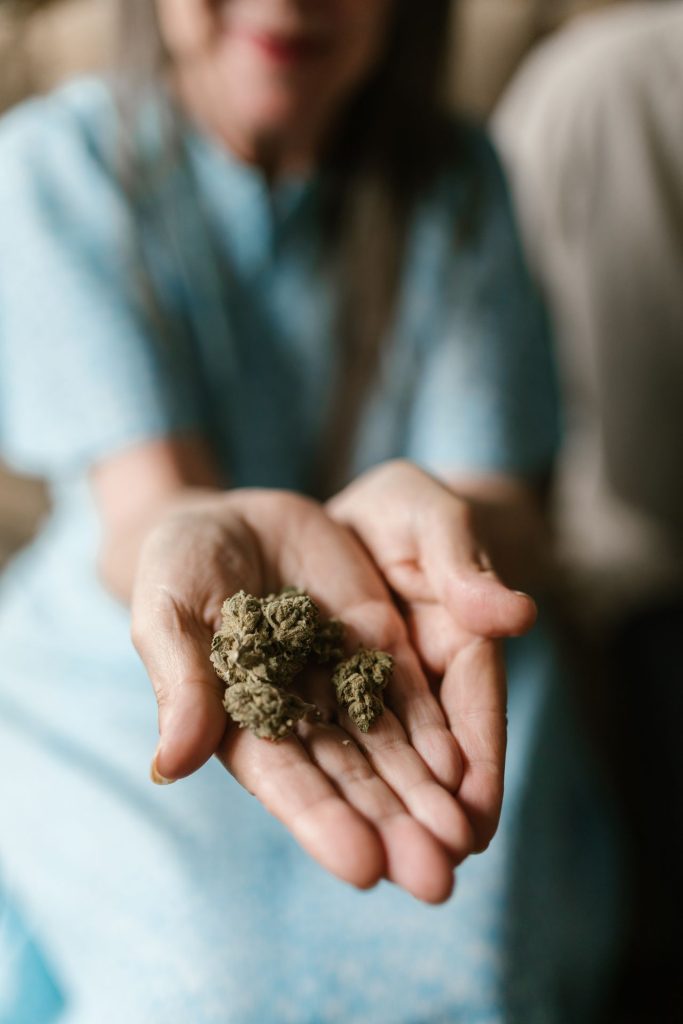
Cannabis, Alcohol, And Multiple Sedating Substances
Alcohol should not be left out of the interaction discussion. Combining alcohol with THC can increase impairment, dizziness, poor judgment, nausea, and the risk of falls or accidents.
The danger may increase further when a person also uses an opioid, sleep aid, anti-anxiety medicine, sedating antihistamine, or muscle relaxant. Even modest amounts may have stronger effects in an older adult than expected.
Cannabis can also make it harder to keep track of medication schedules. A person who is intoxicated may forget whether a dose was already taken, creating the risk of skipping it or taking it twice.
Practical precautions include using a pill organizer, keeping a written medication record, and asking a trusted person to help monitor the first experience if a healthcare professional has agreed that cannabis can be tried.
How To Have A Productive Medication-Review Conversation
A physician or pharmacist can give better guidance when the person provides complete and specific information.
Prepare A Full Medication List
Write down the name, strength, dose, and schedule of every product. Include items used only occasionally.
The list should cover:
- Prescriptions from every healthcare provider
- Over-the-counter medicines
- Vitamins and minerals
- Herbal products
- Sleep aids
- Pain creams and patches
- Alcohol use
- THC and CBD products
- Nicotine
- Other substances
Bring the actual bottles or clear photographs of the labels when possible.
Explain The Reason For Considering Cannabis
Tell the healthcare professional what symptoms you hope to address. Is the goal better sleep, less pain, improved appetite, reduced nausea, or something else?
This matters because the symptom may have a treatable cause. Insomnia, for example, could result from sleep apnea, medication timing, depression, pain, urinary problems, or another medical issue. Adding cannabis without evaluating the cause could delay effective care.
The clinician may also suggest a treatment with stronger evidence, fewer interaction risks, or more predictable dosing.
Bring The Cannabis Label
Do not simply say, “I use cannabis.” Provide:
- Product name
- THC per serving
- CBD per serving
- Serving size
- Method of use
- Frequency
- Time of day used
- Where it was purchased
- Any effects already experienced
Cannabis flower, a 2-milligram THC gummy, and concentrated oil are not equivalent exposures.
Ask Direct Questions
Helpful questions include:
- Could this product interact with any of my medications?
- Could the combination increase bleeding, sedation, or fall risk?
- Does it affect my blood pressure, heart rhythm, blood sugar, liver, or kidneys?
- Should any laboratory tests or medication levels be monitored?
- How long should I wait before deciding whether the effect is too strong?
- What symptoms mean I should stop and call the clinic?
- What symptoms require emergency care?
- Should I avoid alcohol completely?
- Is there a safer alternative for the symptom I want to treat?
Do not interpret a clinician’s silence as confirmation that a combination is safe. Ask for an explicit review.
Safer Practices When A Clinician Approves Cannabis Use
Medical approval does not eliminate every risk, but careful habits can reduce preventable problems.
Start With The Lowest Practical Exposure
Older adults are commonly advised to “start low and go slow.” This means choosing a product with clearly labeled cannabinoid content, beginning with a low amount, and waiting long enough to understand the effect before considering more.
It does not mean increasing the amount automatically. If the lowest amount causes dizziness, confusion, anxiety, or excessive sleepiness, the appropriate response may be to stop and seek guidance.
Change One Thing At A Time
Using several new cannabis products at once makes it difficult to identify the cause of a side effect. The same is true of beginning cannabis during a period when prescription medications are being changed.
Whenever possible, follow the clinician’s plan and keep the routine stable enough to observe what happens.
Use Cannabis In A Safe Setting
The first use—or first use after a long break—should occur when there is no need to drive, cook over an open flame, use power tools, climb stairs repeatedly, or make important decisions.
A trusted adult should be nearby if the person has mobility issues, significant medical conditions, or uncertainty about how the product may affect them.
Keep A Simple Record
A cannabis and medication log can include:
- Date and time
- Product and cannabinoid content
- Amount used
- Medications taken that day
- Food and alcohol intake
- Intended symptom
- Benefits noticed
- Dizziness, sleepiness, anxiety, confusion, or other side effects
- Blood pressure or glucose readings when clinically appropriate
This record can help the clinician identify patterns without relying on memory.
Store Products Safely
Cannabis edibles can resemble ordinary candy or baked goods. Store them in their original, child-resistant packaging and keep them away from children, visitors, pets, and adults with cognitive impairment.
Do not combine cannabis gummies with regular sweets in an unmarked container. Avoid cutting products into pieces unless doing so still permits reliable dosing.
Warning Signs That Require Attention
Mild drowsiness or dry mouth may not be an emergency, but unexpected symptoms should not be ignored—particularly when medications are involved.
Contact a healthcare professional promptly for new or worsening:
- Persistent dizziness
- Excessive sleepiness
- Repeated vomiting
- Unusual bruising or bleeding
- Increasing confusion
- Changes in mood or behavior
- Loss of appetite
- Yellowing of the eyes or skin
- Dark urine
- Falls
- Blood-pressure or glucose readings outside the person’s instructed range
- Medication side effects that intensify after cannabis use
Call emergency services for:
- Chest pain
- Severe trouble breathing
- Loss of consciousness
- Seizure
- Signs of stroke
- Severe bleeding
- Extreme agitation
- Hallucinations with unsafe behavior
- Inability to awaken the person
- Rapid or irregular heartbeat accompanied by serious symptoms
- Severe confusion or sudden difficulty speaking
When seeking help, be honest about the cannabis product, amount, time used, and medications taken. Accurate information helps clinicians respond appropriately.
The Role Of Family Members And Caregivers
Family members can support safer decision-making without taking control away from the older adult.
Helpful actions may include:
- Creating an updated medication list
- Attending an appointment with permission
- Photographing cannabis labels
- Watching for changes in balance or alertness
- Helping maintain a symptom log
- Keeping edibles securely stored
- Arranging transportation
- Checking whether the senior has accidentally repeated a dose
Caregivers should avoid secretly adding cannabis to food or giving someone a product without informed consent. They should also take special precautions when dementia or other cognitive impairment affects the person’s ability to understand dosing and risk.
If cannabis appears to worsen memory, confusion, agitation, or mobility, stop further unsupervised use and contact the healthcare team.
Conclusion
Cannabis may seem like a simple addition to a senior’s wellness routine, but mixing it with medications can create complicated and sometimes serious risks. Both THC and CBD can affect the brain and body. They may add to sedation, dizziness, low blood pressure, confusion, impaired coordination, or other medication side effects. Cannabinoids may also alter the way certain drugs are processed.
The safest first step is not choosing a strain, gummy, tincture, or oil. It is arranging a complete medication review with a physician or pharmacist who knows the senior’s health conditions. That review should include prescriptions, nonprescription medicines, vitamins, herbal products, alcohol, THC, and CBD.
Particular caution is appropriate for seniors taking blood thinners, opioids, sleep aids, anti-anxiety medicines, antidepressants, seizure drugs, heart medications, diabetes treatments, or immunosuppressants. People with serious liver, kidney, cardiovascular, cognitive, or psychiatric conditions may face additional risks.
When a qualified healthcare professional agrees that cannabis can be tried, using a clearly labeled product, beginning cautiously, avoiding alcohol, waiting for the full effect, and tracking symptoms can reduce preventable harm. No prescribed medication should be stopped or changed without medical guidance.
Honest communication remains the most important safety tool. Cannabis use should be treated as part of the complete healthcare picture—not as a separate topic that clinicians do not need to know about.
Frequently Asked Questions
1. Can Seniors Safely Use Cannabis While Taking Prescription Medications?
Some seniors may be able to use certain cannabis products under professional guidance, but there is no universal answer. Safety depends on the medications, doses, medical conditions, cannabis formulation, THC and CBD content, frequency of use, and individual response. A physician or pharmacist should review the complete combination first.
2. What Medications Should Not Be Mixed With Cannabis?
No short list applies to everyone. Blood thinners, opioids, sedatives, sleep medicines, anti-anxiety drugs, seizure medications, immunosuppressants, and certain heart or psychiatric medications deserve particular caution. Over-the-counter products and supplements can also interact.
3. Is CBD Safer Than THC When Taking Medications?
CBD is not intoxicating in the same way as THC, but it is not interaction-free. It may affect how the liver processes some drugs, contribute to drowsiness, and potentially affect liver health. Both CBD and THC should be disclosed to healthcare professionals.
4. Can Cannabis Make A Senior’s Medication Stronger?
Potentially. Cannabinoids may slow the metabolism of certain medicines, allowing their concentration to rise. Cannabis can also strengthen overlapping effects such as sedation, dizziness, confusion, or low blood pressure even when it does not meaningfully change the drug’s blood level.
5. Can Cannabis Make Medication Less Effective?
It may affect the metabolism or clinical effects of some drugs, although evidence varies considerably between medications. Cannabis can also indirectly reduce effectiveness if intoxication causes a person to forget, skip, or repeat prescribed doses.
6. Should Seniors Stop Taking Medication Before Using Cannabis?
No. A prescribed medication should not be stopped, reduced, or rescheduled without instructions from the prescriber. Suddenly stopping certain drugs can cause withdrawal, seizures, blood clots, uncontrolled pain, mood changes, or other serious consequences.
7. Can Seniors Combine Cannabis With Sleeping Pills?
The combination may cause excessive sedation, confusion, impaired coordination, falls, or other complications. This includes prescription sleeping pills and many over-the-counter nighttime products. Ask a physician or pharmacist to review the exact products before combining them.
8. Does Cannabis Interact With Blood Thinners?
Cannabinoids may interact with certain anticoagulants, including medications that require close monitoring. The combination could potentially alter bleeding or clotting risk. Anyone taking a blood thinner should obtain personalized advice before using THC or CBD.
9. How Can Seniors Discuss Cannabis With Their Doctor?
Bring a complete medication list and the cannabis product label. Explain why cannabis is being considered, how it would be used, and whether it has already caused any effects. Ask directly about interactions, monitoring, fall risk, alcohol use, and warning signs.
10. What Should A Senior Do After Accidentally Taking Too Much THC?
The person should remain in a safe place, avoid driving, and have a trusted adult stay nearby. Contact a healthcare professional or poison-control service for guidance. Call emergency services for chest pain, trouble breathing, loss of consciousness, seizures, severe confusion, unsafe behavior, or signs of stroke.
11. Can Cannabis Increase The Risk Of Falls?
Yes. THC may impair balance, coordination, reaction time, and judgment. Cannabis can also cause dizziness or a drop in blood pressure when standing. These effects may become stronger when cannabis is combined with sedating or blood-pressure-lowering medications.
12. Should Seniors Tell Their Pharmacist About Cannabis?
Yes. Pharmacists are trained to evaluate medication interactions and may recognize concerns involving prescriptions from different clinicians. Provide the product’s THC and CBD content, method of use, dose, and frequency.
13. Are Cannabis Edibles Safer Than Smoking?
Edibles avoid smoke exposure, but they are not risk-free. Their effects can be delayed and long-lasting, increasing the chance of taking too much. They can also interact with medications. The safest method depends on the individual’s health and should be discussed with a healthcare professional.
14. Can Cannabis Replace Pain Medication?
Cannabis should not automatically replace prescribed pain treatment. Evidence and risks vary according to the condition and product. Any reduction in opioids or other pain medicines should occur under professional supervision.
15. How Often Should A Senior’s Cannabis And Medication Plan Be Reviewed?
Review it whenever a medication, supplement, cannabis product, dose, health condition, or symptom changes. Regular reviews are also helpful for seniors using cannabis over time, even when no obvious problem has occurred.
Explore Senior-Focused Cannabis Wellness With Trusted Guidance
As we age, wellness needs can change. Better sleep, greater comfort, relaxation, stress support, and maintaining an active lifestyle can become increasingly important. At Woodland Cannabis Dispensary, our Senior-Focused Cannabis Wellness approach helps older adults explore cannabis products with greater confidence, clarity, and personalized guidance.
Our friendly and knowledgeable team takes the time to explain different cannabis options, including cannabinoid profiles, terpene combinations, product strengths, and consumption methods. We offer a carefully selected variety of premium, lab-tested cannabis products so seniors can better understand their choices and find options that complement their individual wellness goals and lifestyle.
Whether you’re new to cannabis, returning after many years, or simply interested in learning more about today’s products, Woodland Cannabis Dispensary provides a welcoming environment where questions are encouraged, and education comes first.
Visit Woodland Cannabis Dispensary or browse our online menu for convenient pickup. Discover a more comfortable and informed way to explore Senior-Focused Cannabis Wellness with guidance from a team that’s here to help.
Disclaimer
The materials available on this website are for informational and educational purposes only and are not intended to provide medical or professional advice. You should consult with a qualified healthcare provider for advice concerning any particular medical issue or condition. Do not act or refrain from acting based on any content included on this site without seeking appropriate medical or other professional advice. The information presented on this website may not reflect the most current medical developments or practices. No action should be taken in reliance on the information on this website. We disclaim all liability for actions taken or not taken based on any or all of the contents of this site to the fullest extent permitted by law.
